
What is Wolverine?
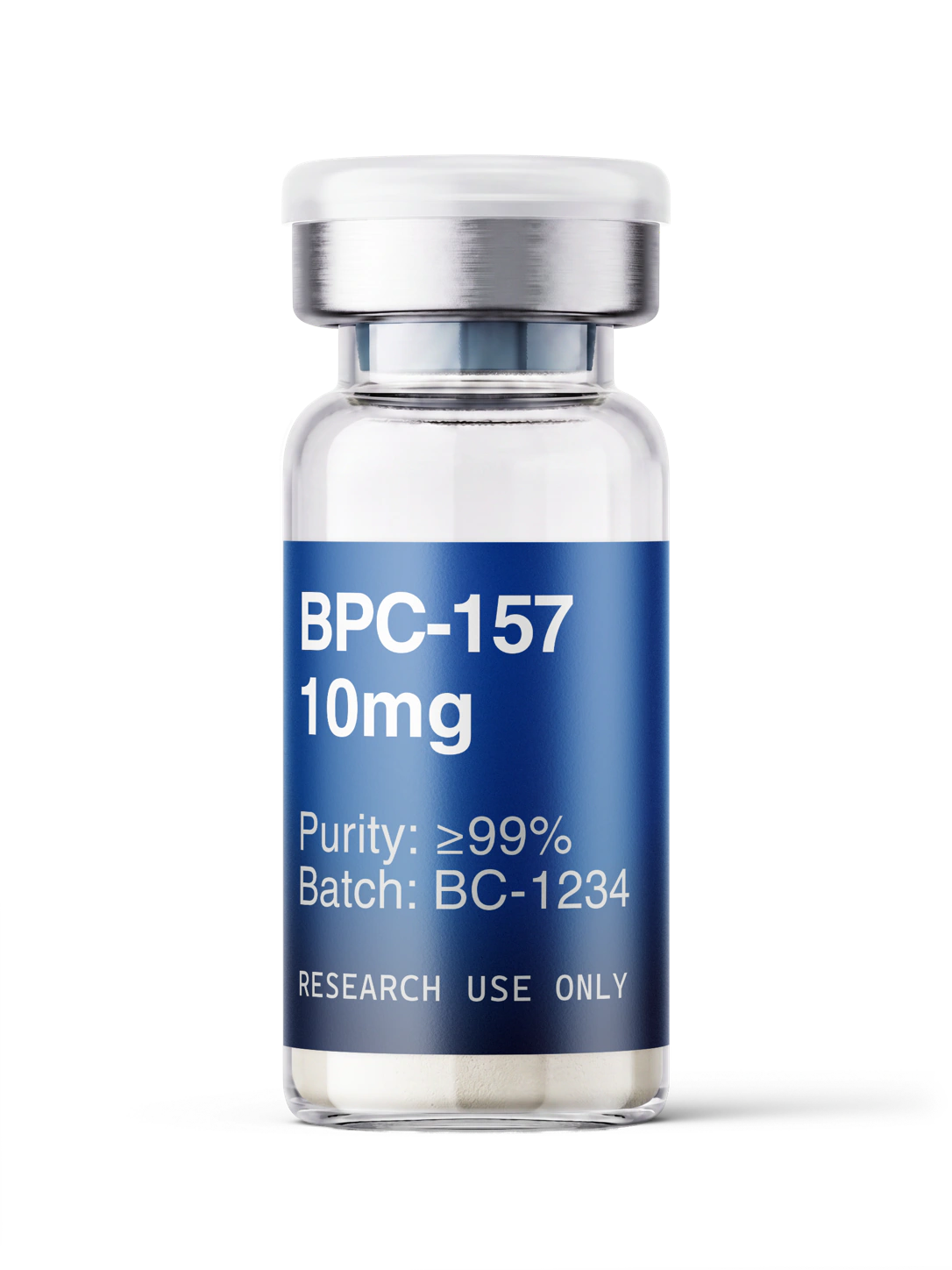
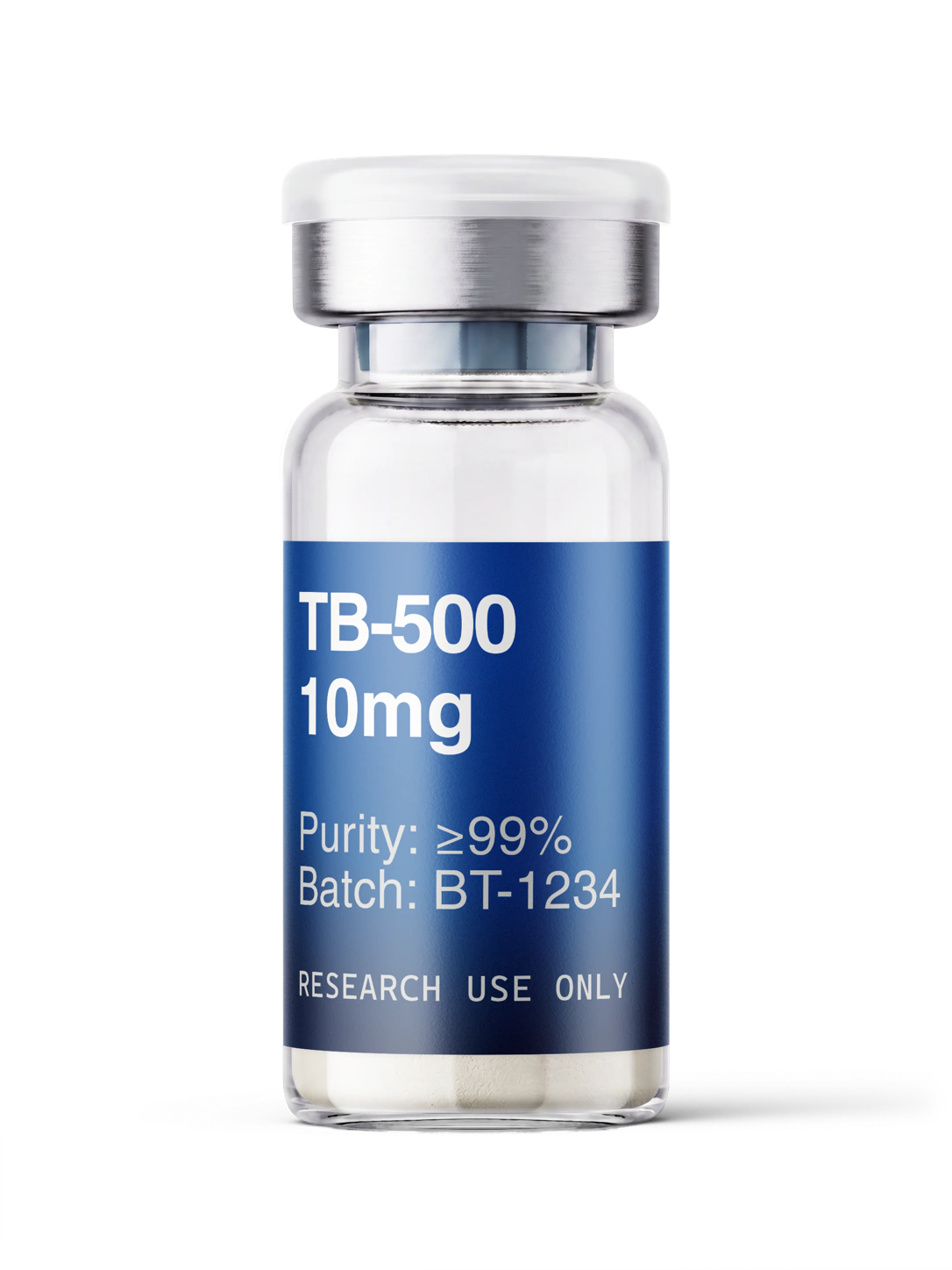
Wolverine is the trade nickname for BPC-157 and TB-500 sold together, in our catalogue as two separate 10 mg vials. The pair has been tested once in rats, doing no better than either peptide alone, and in people only in 4 uncontrolled cases. Neither is an authorised medicine in the EU or the US, and BPC-157 rests almost entirely on animal work. Both are banned in sport at all times.
At a glance
- What it is
- Nickname for BPC-157 plus TB-500; ours is two separate 10 mg vials
- Status in the EU
- Neither component is an authorised medicine; we sell both as research material
- Status in the US
- Not FDA-approved; advisers backed compounding in July 2026, no FDA decision yet
- Research
- 1 rat study of the pair (32 rats); 4 patients in an uncontrolled chart review
- Sport
- Prohibited at all times (WADA S0 and S2.3)
- Human evidence
- Animal data only; for the pair, one rat study and 4 uncontrolled cases
Wolverine dosage snapshot
- Route
- subQ
- Dose range
- 500 mcg-1 mg blend
- Frequency
- daily or weekly protocol
- Duration
- 4-8 weeks
Based on reported research sources; not a dosing instruction.
Composition and origin
Wolverine is not a molecule but a pairing: two unrelated peptides sold as one product. In our catalogue it is a bundle of two separate vials, 10 mg of BPC-157 and 10 mg of TB-500. Vials with both peptides premixed in one vial are listed separately as BPC-157 + TB-500.
BPC-157 is a synthetic chain of 15 amino acids based on a protein found in human gastric juice, first described in 1993. TB-500 is a name with two meanings. The FDA and anti-doping laboratories use it for Ac-LKKTETQ, a seven-amino-acid fragment (residues 17 to 23) of thymosin beta-4 with an acetyl group on the first amino acid. Some sellers present it as thymosin beta-4 itself, a 43-amino-acid protein first isolated from calf thymus and found in a wide range of cell types. Our TB-500 is listed as thymosin beta-4 acetate.
The pairing comes from online forums and vendor guides, not from research. The FDA notes that TB-500 became a forum topic after 2010, and its 2026 reviewers found combined BPC-157 and TB-500 products offered online as injections, nasal sprays and capsules.
How it is thought to work
BPC-157 has no identified molecular target. In animal and cell studies it raised growth-hormone receptor expression in rat tendon cells, switched on pathways for cell growth and blood-vessel formation, and lowered inflammatory signalling. In rats and dogs its half-life is under 30 minutes; a 2025 review describes breakdown in the liver and clearance by the kidneys.
Thymosin beta-4 binds actin, the protein that shapes cells and lets them move. In animal models it promotes cell migration, including of stem and progenitor cells, new blood-vessel growth and less scarring, and it has been studied for repair of skin, eye, heart and brain tissue.
Whether the seven-amino-acid TB-500 fragment carries those effects is not settled. It contains the actin-binding region, and older animal studies of the same sequence without the acetyl group reported wound-healing effects, but the FDA notes these cannot simply be carried over. In the one cell experiment on TB-500 itself that the FDA cites, it did not speed the closure of scratch wounds, while one of its breakdown products did.
The argument for combining the two is that they act on different pathways and might add up. That is a hypothesis: the only study that tested the pair found no added effect.
Is Wolverine approved?
No. No medicine containing BPC-157 or thymosin beta-4 in any form is authorised by the EMA or the FDA, the FDA found no approved product containing either in any country it checked, and no combination product exists. Because neither is an authorised medicine, neither may be sold or advertised in the Netherlands as a medicine for people; our shop sells both as research material only.
In the United States the question is whether pharmacies may compound them. On 29 September 2023 the FDA placed both BPC-157 and the thymosin beta-4 fragment LKKTETQ, which it notes is also known as TB-500, in Category 2 of its interim policy for nominated bulk substances, the group with significant safety concerns. By April 2026 both had moved to the list of nominations withdrawn by their nominators. On 23 July 2026 the FDA's Pharmacy Compounding Advisory Committee voted 8 to 6, with 1 abstention, to recommend adding BPC-157 and TB-500 (together with KPV) to the list of substances pharmacies may compound, against the advice of FDA staff.
That vote is advice only. On 14 October 2026 the FDA sent an "Interim Access Policy for Compounding Using Certain Peptides" to the White House Office of Management and Budget for review; its text had not been published by 28 October 2026, so which peptides it covers is not known. No final decision or proposed rule on either peptide had been published by then.
In sport both are prohibited at all times: BPC-157 under S0, the class for substances without any regulatory approval, and thymosin beta-4 with its derivatives such as TB-500 under S2.3, growth factors. The 2027 list, in force from 1 January 2027, keeps both.
What the research shows
Direct evidence on the combination comes down to one rat study, one small chart review and one adverse-event report. Everything else concerns the two parts separately.
- The pair in rats (Biçer et al., 2026): 32 rats with a cut and repaired Achilles tendon were split into four groups of 8 (control, BPC-157, TB-500, both) and given daily injections into the abdominal cavity for four weeks, with four tendons per group for each type of test. Only the TB-500-only group had significantly stronger tendons than controls. The combination improved one tissue score over controls but did not differ from any group in strength, and the authors found no added benefit over either peptide alone.
- The pair in people (Lee and Padgett, 2021): in a retrospective chart review at a US clinic, 4 of the 16 knee-pain patients reached by phone had received knee injections of BPC-157 together with thymosin beta-4, and 3 of those 4 reported significant relief. There was no control group and no standard outcome measure.
- An adverse-event report to the FDA describes a 40-year-old woman who injected a research-labelled BPC-157 and TB-500 product twice daily and developed diffuse darkening of the skin and gums after a week of use. It came back when she restarted and stopped when she quit; because the product held two peptides, the FDA could not say which one caused it.
- BPC-157 alone: a 2025 systematic review found 36 studies, 35 of them preclinical. The FDA's 2026 review counted five small human studies (enemas, knee and bladder injections, infusions) without reported serious adverse events, but all were short and reported little on safety.
- The TB-500 fragment alone: in its 2026 review the FDA found no human studies, no human exposure data and no animal study testing whether it heals wounds.
- Full-length thymosin beta-4: it has been given intravenously to 40 healthy volunteers, some on placebo (phase 1, no dose-limiting toxicity), and tested as eye drops in a phase 3 trial in 18 people with neurotrophic keratopathy, where 6 of 10 healed completely at four weeks against 1 of 8 on placebo (p = 0.0656, short of statistical significance). None of these products has been authorised by the EMA or the FDA, and none of the trials tested injections for tendon or muscle injury.
The naming problem
The FDA treats inconsistent naming as a safety risk in itself. TB-500 is not an official drug name, and the agency found several salts and even different active molecules sold under it. The nomination it reviewed in 2026 listed a molecular formula, and an alternative CAS number, that matched neither the fragment nor its acetate salt.
For a blend this matters twice over. A vial labelled TB-500 may hold the 7-amino-acid fragment or the 43-amino-acid protein, two molecules of very different size, so the same number of milligrams does not mean the same substance. Only a certificate of analysis that reports the measured mass can show which one a batch contains.
The Wolverine name is just as loose: a clinic website quoted in the FDA's 2026 review of BPC-157 says that BPC-157 on its own has been called the wolverine compound.
Potential benefits
- Achilles tendon repair (rats)
- Tendon, ligament and gut healing (BPC-157, animals)
- Corneal healing (thymosin beta-4 eye drops, small trial)
- Heart repair after infarction (thymosin beta-4, animals)
Safety profile
Unknown risk- CautionNo controlled human safety data exist for the combination, for injected BPC-157 or for the TB-500 fragment; the FDA found no human exposure data for TB-500 in 2026.
- CautionOne FDA adverse-event report describes diffuse darkening of the skin and gums after a week of injecting a BPC-157 and TB-500 product; it returned on restarting and stopped after quitting.
- CautionThe FDA warns that injected peptides such as these may provoke immune reactions, made more likely by aggregation and impurities; this has not been tested in people.
- CautionTB-500 can mean two different molecules; identity and purity depend on the batch, and a certificate of analysis is the only check.
Frequently asked questions
- Is Wolverine legal in the Netherlands?
- Neither BPC-157 nor TB-500 is an authorised medicine, so neither may be sold or advertised as a medicine for people. Our shop sells both as research material only.
- Is Wolverine banned in sport?
- Yes, both parts, at all times, in and out of competition: BPC-157 under WADA category S0 and thymosin beta-4 and its derivatives, TB-500 among them, under S2.3. The 2027 list keeps both, and in the Netherlands the Dopingautoriteit applies the same list.
- Does BPC-157 with TB-500 work better than either alone?
- There is no evidence that it does. The only study that compared them, in rats with a repaired Achilles tendon, found that only the TB-500-only group had significantly stronger tendons than untreated controls, and the combination added nothing over either peptide. With four tendons per group per test, it was too small to settle the question either way.
- Has Wolverine been tested in humans?
- Not in any trial. The human record is 4 patients in an uncontrolled knee-pain chart review who received both peptides, and one adverse-event report to the FDA. Full-length thymosin beta-4 has been through human trials on its own, as an intravenous drug and as eye drops, but never as part of a blend.
- Is TB-500 the same as thymosin beta-4?
- Not necessarily. The FDA and anti-doping laboratories use TB-500 for a seven-amino-acid fragment of thymosin beta-4, while some sellers use the name for the full 43-amino-acid protein. WADA bans both. Which one a vial contains is a question for its certificate of analysis.
Storage and handling
Store according to product-label instructions and batch handling notes. Lyophilized research peptides are commonly kept dry, protected from light, and handled with clean laboratory technique.
References
Checked against these sources on 28 October 2026.