
What is GLOW?
GLOW is a market name for three unrelated peptides: GHK-Cu, BPC-157 and TB-500. No published study has tested the three together, and in rats BPC-157 plus TB-500 did no better than either alone. In people, GHK-Cu has been tested only in creams and wound gels, and BPC-157 in five small studies. None is an authorised medicine in the EU or the US, and the blend is banned in sport at all times.
At a glance
- What it is
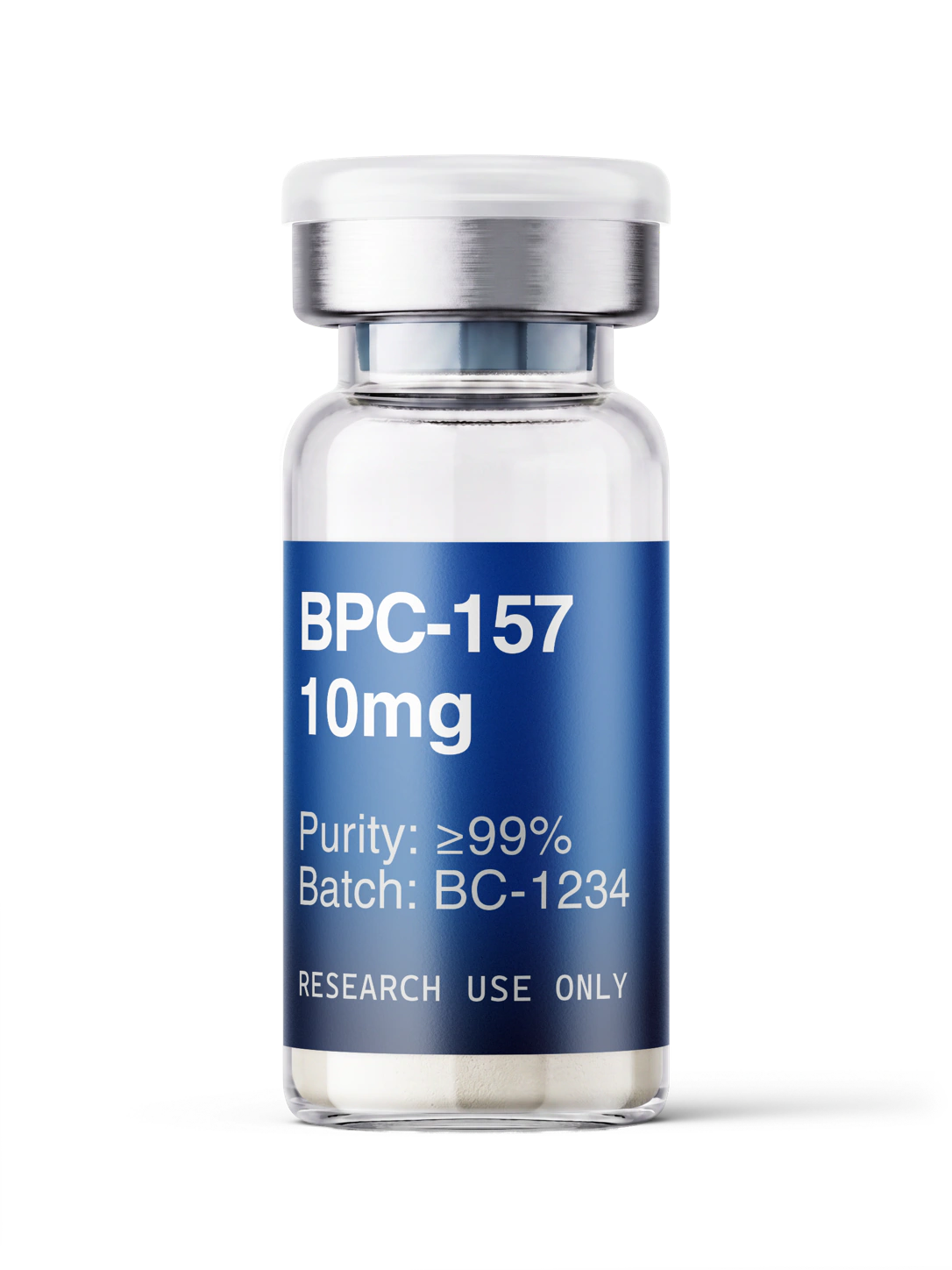
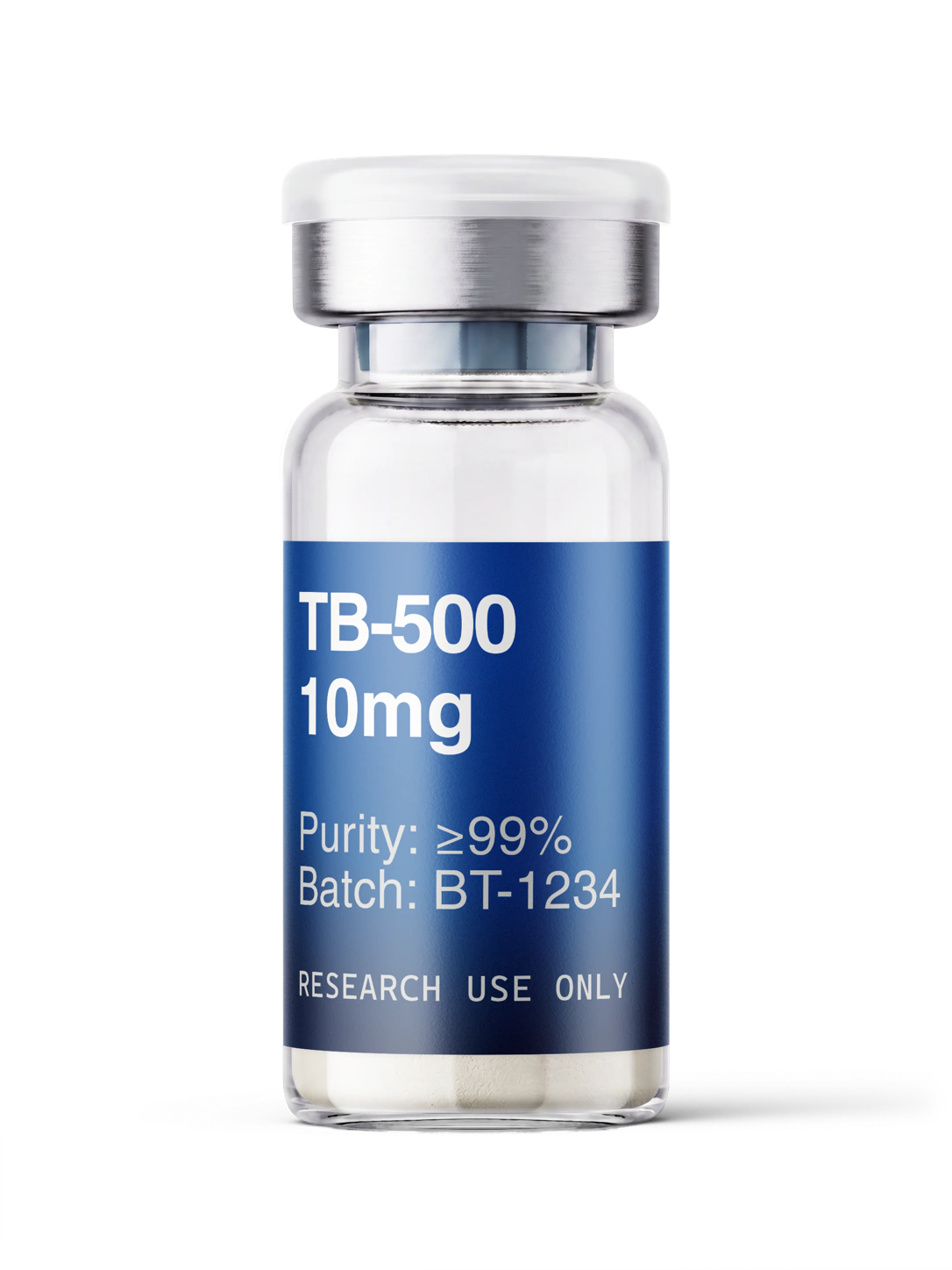
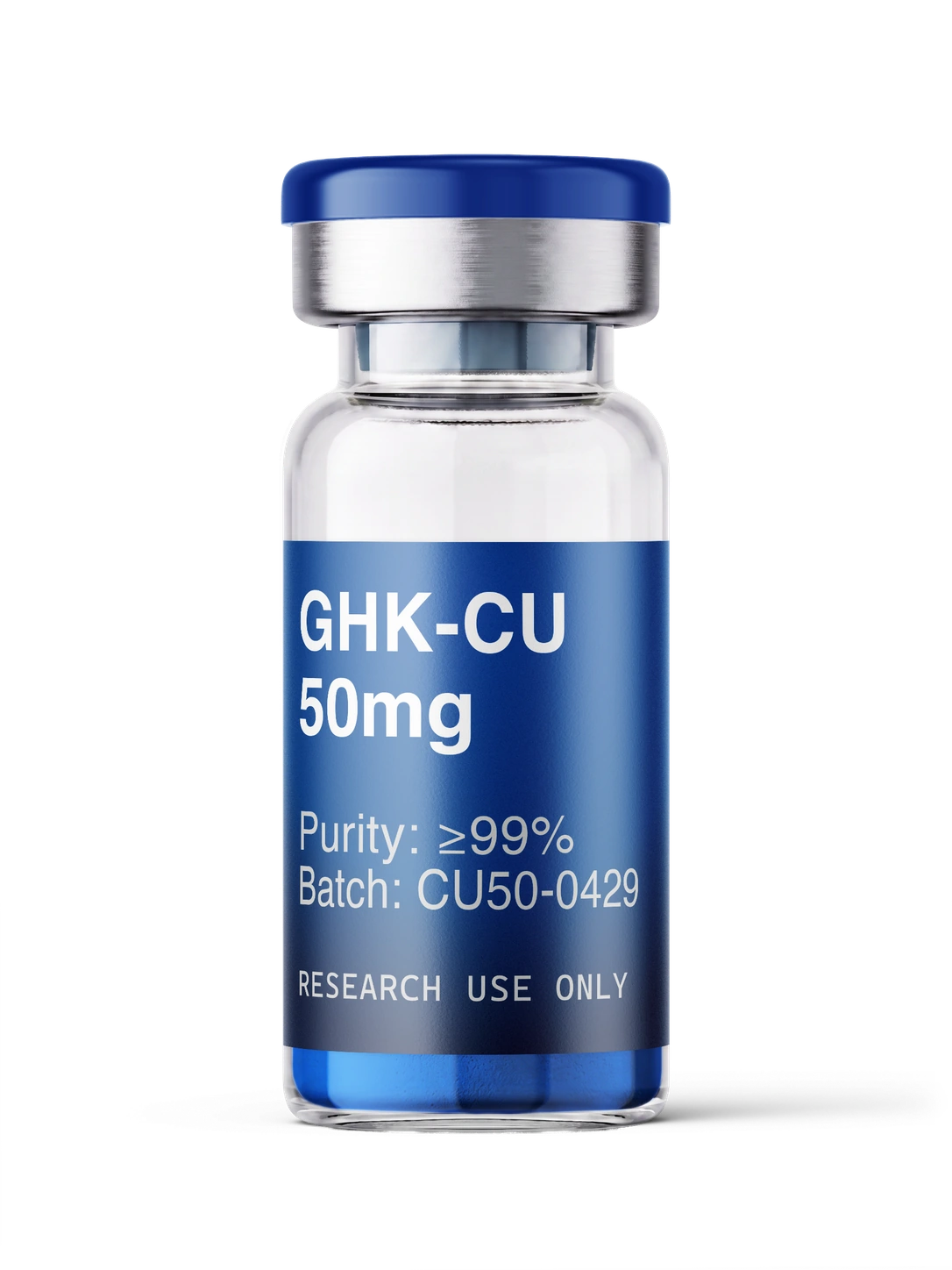
- Market name for GHK-Cu + BPC-157 + TB-500; ours holds 50, 10 and 10 mg
- Status in the EU
- None of the three is an authorised medicine; GHK-Cu may be used in cosmetic creams
- Status in the US
- Not FDA-approved; advisers backed compounding BPC-157 and TB-500, GHK-Cu review due by Feb 2027
- Research
- No study of the three together; GHK-Cu tested in people only as creams and wound gels
- Sport
- Prohibited at all times through BPC-157 (S0) and TB-500 (S2.3); GHK-Cu itself is not named
- Human evidence
- Animal data only: the blend was never tested, and GHK-Cu never by injection
GLOW dosage snapshot
- Route
- subQ
- Dose range
- 2.5-3.5 mg blend
- Frequency
- daily
- Duration
- 4-12 weeks
Based on reported research sources; not a dosing instruction.
Composition and origin
GLOW is not a single substance but three peptides that have nothing to do with each other chemically. In our catalogue it comes in two forms: the GLOW bundle of three separate vials (50 mg GHK-Cu, 10 mg BPC-157 and 10 mg TB-500), and Glow Stack 70mg, vials that each hold the same three amounts together. GLOW is a market name, not a pharmaceutical one, and no published study has tested this combination or these amounts.
GHK-Cu is a copper complex of a peptide of just three amino acids: glycine, histidine and lysine (glycyl-histidyl-lysine). Loren Pickart isolated it in 1973 from human albumin, as an activity that made liver tissue from older people produce proteins the way younger tissue does. Later work identified it as a three-amino-acid peptide with a strong affinity for copper, and it is thought to act as the copper complex. His group reports plasma levels of about 200 ng/mL at age 20, falling to 80 ng/mL by age 60. It is used as an ingredient in skin cosmetics.
BPC-157 is a 15-amino-acid peptide made by synthesis; its sequence is taken from a larger protein reported in human gastric juice, and it was first described in 1993. TB-500 has two meanings. The FDA uses it for Ac-LKKTETQ, a seven-amino-acid fragment (residues 17 to 23) of thymosin beta-4 with an acetyl group on the first amino acid, and states that the two are not the same substance, while several websites present TB-500 as a synthetic version of thymosin beta-4 itself, a protein of 43 amino acids. Our TB-500 is listed in our catalogue as thymosin beta-4 acetate; only a certificate of analysis that reports the measured mass shows which molecule a batch contains. BPC-157 and TB-500 have their own articles in this wiki.
How it is thought to work
In fibroblast cultures GHK-Cu stimulated both the production and the breakdown of collagen at very low concentrations (1 to 10 nanomolar), and it influenced the enzymes that remodel connective tissue and their inhibitors. In rabbits it sped up wound healing and increased blood-vessel formation, and in rats it raised the collagen content of implanted wound chambers. Pickart's group has also used gene-expression databases to propose that GHK resets the activity of many genes towards repair; a 2026 review points out that these analyses often concern GHK without copper, computer-predicted effects or cell types that do not match a GHK-Cu product, and calls them hypothesis-generating rather than proof.
BPC-157 has no identified molecular target, and the FDA describes its mechanism as poorly understood; animal and cell studies report blood-vessel growth and lower release of inflammatory factors. Thymosin beta-4 binds actin, the protein that lets cells change shape and move. Whether the seven-amino-acid TB-500 fragment shares its effects is unproven: the FDA found no animal study that tested whether it heals wounds, and in the one cell study it cites, TB-500 did not speed the closure of scratch wounds in fibroblast cultures.
The argument for combining them is that they act on different pathways and might add up: GHK-Cu for skin and collagen, the other two for tissue repair. That is a hypothesis. No published study has tested the three together, and in the only controlled study of BPC-157 with TB-500, in rats with a repaired Achilles tendon, the pair did no better than either peptide alone.
Is GLOW approved?
No. None of the three is the active substance of any medicine authorised in the Netherlands, either nationally or EU-wide: the CBG's medicines register, checked on 28 October 2026, lists none of them. In the EU, creams and serums containing GHK-Cu may be sold as cosmetics if they meet the Cosmetics Regulation, but that is not an approval as a medicine, and the same regulation states that anything intended to be injected is not a cosmetic. Our shop sells GLOW as research material only.
In the United States none of the three is an approved drug, and the debate is about pharmacy compounding. On 29 September 2023 the FDA placed BPC-157, the TB-500 fragment and GHK-Cu for injection in Category 2 of its interim policy for nominated bulk substances, the group with significant safety concerns, citing possible immune reactions from aggregation and peptide impurities and too little human safety data. The nominations were later withdrawn. One GHK-Cu nominator kept its nomination for non-injectable forms, which the FDA put back under evaluation on 14 May 2026, and the agency says it will consult its Pharmacy Compounding Advisory Committee on GHK-Cu before the end of February 2027.
For BPC-157 and TB-500 that committee has already met. On 23 July 2026 it voted 8 to 6, with one abstention, to recommend adding both (together with KPV) to the list of substances pharmacies may compound, against the advice of FDA staff. The vote is advice only; no final FDA decision on any of the three had been published by 28 October 2026.
In sport the blend is prohibited at all times, in and out of competition, because of two of its parts: the 2026 WADA list names BPC-157 under S0, non-approved substances, and thymosin beta-4 and its derivatives such as TB-500 under S2.3, growth factors. GHK-Cu is not named on the list, but S0 covers any pharmacological substance without approval for human therapeutic use, and that includes GHK-Cu. The Dopingautoriteit publishes the Dutch translation of this list.
What the research shows
There is no research on GLOW as such. What exists concerns the parts, and in one case a pair of them. The human data on GHK-Cu concern products for the skin and for wounds, and much of the older work comes from the group of its discoverer.
- The three together: we found no cell, animal or human study of GHK-Cu combined with BPC-157 and TB-500 in the biomedical literature (Europe PMC, searched October 2026).
- BPC-157 with TB-500 (Biçer et al., 2026): 32 rats with a cut and repaired Achilles tendon were split into four groups of 8 and given daily injections into the abdominal cavity for four weeks. Only the TB-500 group had significantly stronger tendons than the controls, and the combination added nothing over either peptide alone.
- BPC-157 with thymosin beta-4 in people (Lee and Padgett, 2021): a retrospective chart review of 17 people with knee pain who had BPC-157 injected into the knee. The investigators reached 16 of them by phone to ask about relief; 4 of those 16 had received BPC-157 combined with thymosin beta-4, and 3 of the 4 reported significant relief. There was no control group, and GHK-Cu was not part of it.
- GHK-Cu on diabetic foot ulcers (Mulder et al., 1994): in a randomised, evaluator-blinded, placebo-controlled multicentre trial, ulcers on the sole of the foot treated with GHK-Cu gel closed by a median 98.5% of their area, against 60.8% with the vehicle gel (p < 0.05). No GHK-Cu medicine followed.
- GHK-Cu in cosmetics: Pickart's group reports 12-week cream studies in 71, 41 and 67 women with sun-damaged skin, described as placebo-controlled, with fewer fine lines and denser, thicker skin, and a small pilot in which collagen production in thigh skin rose in 70% of women on a copper-peptide cream, against 50% on vitamin C cream and 40% on retinoic acid. The 12-week studies appeared as a conference presentation, a university report and a book chapter, not as peer-reviewed papers.
- Newer controlled skin studies: after CO2 laser resurfacing, a randomised study in which 13 patients completed found no objective benefit from GHK-Cu products, only higher patient satisfaction (2006). In a 2026 split-face study in 18 people, published in conference proceedings, hair count rose over 12 weeks on the eyebrow treated with a 2% GHK-Cu serum and hair thickness improved, while hair count did not change significantly on the eyebrow given a vehicle serum.
- BPC-157: the FDA's 2026 review found five small human studies (enemas, knee and bladder injections, and infusions in 2 people), none of them injections under the skin. No serious adverse events were reported, but the studies were short and reported little on safety. The only placebo-controlled test of effect, an enema trial in 53 people with ulcerative colitis, showed no clear difference from placebo and was published only as a meeting abstract.
- The TB-500 fragment: in its 2026 review the FDA found no clinical study, no human exposure data and no animal study of wound healing.
GHK-Cu in a cream versus GHK-Cu in a vial
GHK-Cu's reputation comes from skin care, but a GLOW vial is a different situation. Every published human study we found applied GHK-Cu to the skin or to a wound; a 2026 review that mapped the human evidence lists only creams, serums and gels, and no injection study. What a cream does says little about an injection, which bypasses the skin barrier and delivers the whole dose into the body.
Regulators draw the same line. The EU treats copper-peptide creams as cosmetics but excludes anything meant to be injected from that category, and the FDA placed only the injectable form of GHK-Cu in its category of substances with significant safety concerns, while it is again evaluating non-injectable GHK-Cu for compounding. The 2026 review adds two open questions for injected products: how much copper ends up in the body with repeated use, and whether the peptide's effect on blood-vessel growth matters where it is unwanted, as in a tumour. Neither has been studied in people.
Potential benefits
- Diabetic foot ulcers (GHK-Cu gel, one 1994 trial)
- Skin and eyebrow cosmetics (GHK-Cu, small skin studies)
- Collagen production (GHK-Cu, cell studies)
- Tendon healing (BPC-157 and TB-500, rats)
- Wound healing (GHK-Cu, animals)
Safety profile
Unknown risk- CautionNo human safety data exist for the combination, for injected GHK-Cu or for the TB-500 fragment, and none of the five human BPC-157 studies used injections under the skin.
- CautionThe FDA flags a possible risk of immune reactions for injected forms of all three peptides, made more likely by aggregation and peptide-related impurities; this has not been tested in people.
- CautionOne FDA adverse-event report describes darkening of the skin and gums after a week of injecting a BPC-157 and TB-500 product; it returned on restarting and stopped after quitting.
- CautionFor injected GHK-Cu, a 2026 review flags copper build-up with repeated use and unwanted blood-vessel growth, for example in a tumour, as open questions; neither has been studied in people.
- CautionTB-500 can mean two different molecules; identity and purity depend on the batch, and a certificate of analysis is the only check.
Frequently asked questions
- Is GLOW legal in the Netherlands?
- None of the three peptides is a registered medicine in the Netherlands, so GLOW may not be sold or advertised as a medicine for people. GHK-Cu on its own may be used in cosmetic creams, but EU cosmetics rules exclude anything meant to be injected. Our shop sells GLOW as research material only.
- Is GLOW banned in sport?
- Yes, at all times, in and out of competition, because of two of its three parts: the 2026 WADA list names BPC-157 under S0, non-approved substances, and thymosin beta-4 and its derivatives, TB-500 among them, under S2.3, growth factors. GHK-Cu is not named, but as a substance without approval for human therapeutic use it falls under S0. The Dopingautoriteit publishes the same list in Dutch.
- Has GLOW been tested in humans?
- No. No published study, in people or in animals, has tested GHK-Cu, BPC-157 and TB-500 together. Each part has its own, mostly small, evidence base: GHK-Cu as creams and wound gels, BPC-157 in five small human studies, and the TB-500 fragment not at all.
- Does injected GHK-Cu work like GHK-Cu in skin creams?
- Nobody knows. The molecule is the same, but every published human study we found applied it to the skin or to a wound. In 2023 the FDA put injectable GHK-Cu in its category of substances with significant safety concerns, citing possible immune reactions and limited human data, and only non-injectable GHK-Cu is now being evaluated for US pharmacy compounding.
- What is the difference between GLOW, KLOW and Wolverine?
- Wolverine is BPC-157 with TB-500. GLOW adds GHK-Cu to that pair, and KLOW adds KPV to GLOW: our KLOW Stack holds the same 50, 10 and 10 mg plus 10 mg of KPV. Neither GLOW nor KLOW has been studied as a whole. The only controlled study of any of these combinations is the 2026 rat study of the Wolverine pair, which found no added benefit over either peptide alone; a 2021 chart review without a control group included 4 people given BPC-157 with thymosin beta-4 in the knee.
- Is GLOW safe?
- That is unknown. There are no safety data on the combination, and none on injecting GHK-Cu or the TB-500 fragment. The FDA holds one adverse-event report of skin and gum darkening after a week of injecting a BPC-157 and TB-500 product, which returned when the person restarted, and it flags a risk of immune reactions for injected forms of all three peptides. The 2026 eyebrow study of a GHK-Cu serum reported no serious adverse events, but a study on the skin says little about injection.
Storage and handling
Store according to product-label instructions and batch handling notes. Lyophilized research peptides are commonly kept dry, protected from light, and handled with clean laboratory technique.
References
Checked against these sources on 28 October 2026.